Top-down dust removal
Ceiling grid, light housings, vent faces, ledges, and wall surfaces are worked downward in order, so settling dust lands on floors that have not been cleaned yet.
Serving Glendale, Arizona & surrounding areas
Mon–Fri 8am–6pm · Sat 9am–2pm
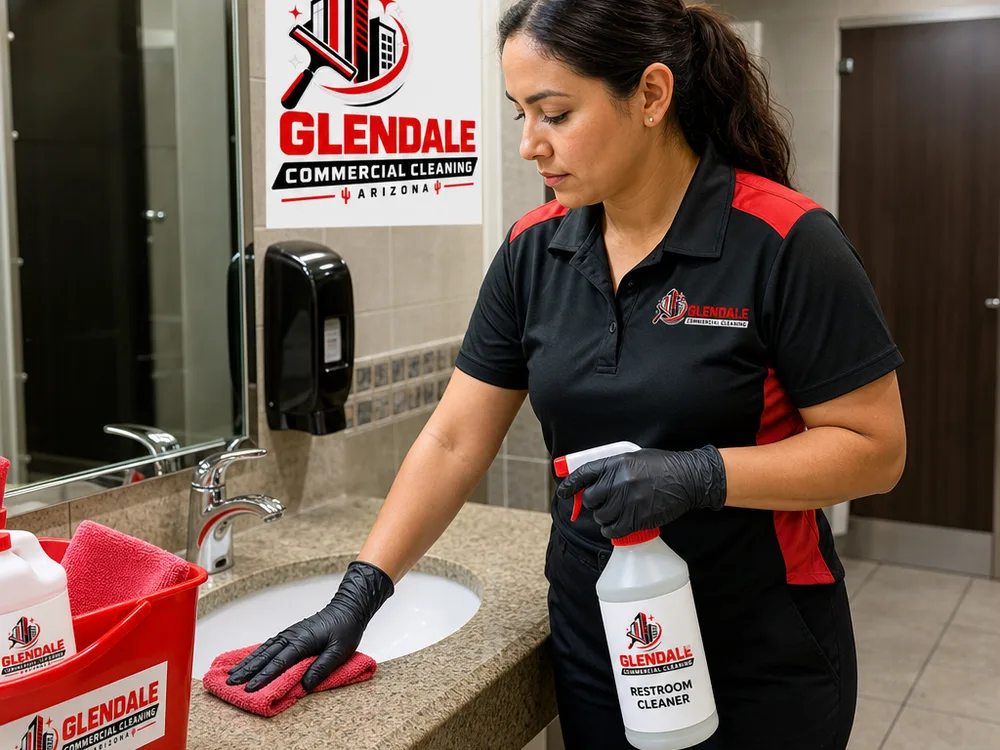
Construction Dust Removal
Cleanup after a build or remodel in Glendale, handling the fine dust that keeps resettling, plus adhesive residue, label removal, glass detailing, and the punch items before handover.
Dust Phases
Drywall and saw dust stays airborne for days and settles in waves. A single final clean scheduled too early simply moves the problem to the week after handover.
Glendale Commercial Cleaning provides commercial cleaning and janitorial service for Glendale, Arizona businesses, with scopes built around your hours, traffic patterns, and actual surfaces. The plan changes between a quiet professional office, a high-touch retail floor, and a shared multi-tenant suite.
Our approach is straightforward:
You will find us near Glendale’s downtown core at 5555 N 51st Ave, Suite 5, which helps when you need reliable service coordination for multi-tenant buildings, storefronts, and office corridors where timing matters.
Handover Scope
Top-down dust removal, adhesive and label clearing, glass and frame detailing, fixture and hardware cleaning, new-floor first cleaning, and the punch walkthrough make up the handover scope.
Ceiling grid, light housings, vent faces, ledges, and wall surfaces are worked downward in order, so settling dust lands on floors that have not been cleaned yet.
Manufacturer labels, protective film, tape residue, and sealant smears come off glass, frames, fixtures, and appliances using solvents chosen for each substrate.
Windows, partitions, and side lights carry film from cutting and sanding. Tracks and frames are cleared first, because dust left in a track streaks the pane within hours.
Door jambs, hinges, handles, switch plates, outlet covers, and cabinet interiors hold fine dust in every seam. These are the details an owner walkthrough tends to check first.
New flooring gets the method its manufacturer allows, since curing adhesives and fresh grout haze respond badly to standard chemistry and aggressive machine work.
A final pass against the open items catches fingerprints, drips, and dust that returned while trades finished. Anything outside cleaning scope is reported rather than patched.
Phase Sequencing
Construction cleaning is three distinct visits on most projects, not one. Placing them correctly in the build sequence is what prevents repeat work at your expense.
Core janitorial cleaning often includes:
Optional add-ons include interior glass, high dusting, employee-kitchen degreasing, and consumables tracking by request.
Many Glendale facilities prefer a rotating weekly detail list, allowing the space to stay sharp without turning every visit into a deep clean.

Surface Protection
Everything in a finished build is new, uncured in places, and under warranty. The wrong product on day one creates a defect that outlives the whole project.
Deep cleaning commonly focuses on:
Whether you manage a small Downtown Glendale office, a busy storefront, or a shared multi-tenant suite, periodic deep cleaning prevents the slow decline that makes a technically clean space feel worn.
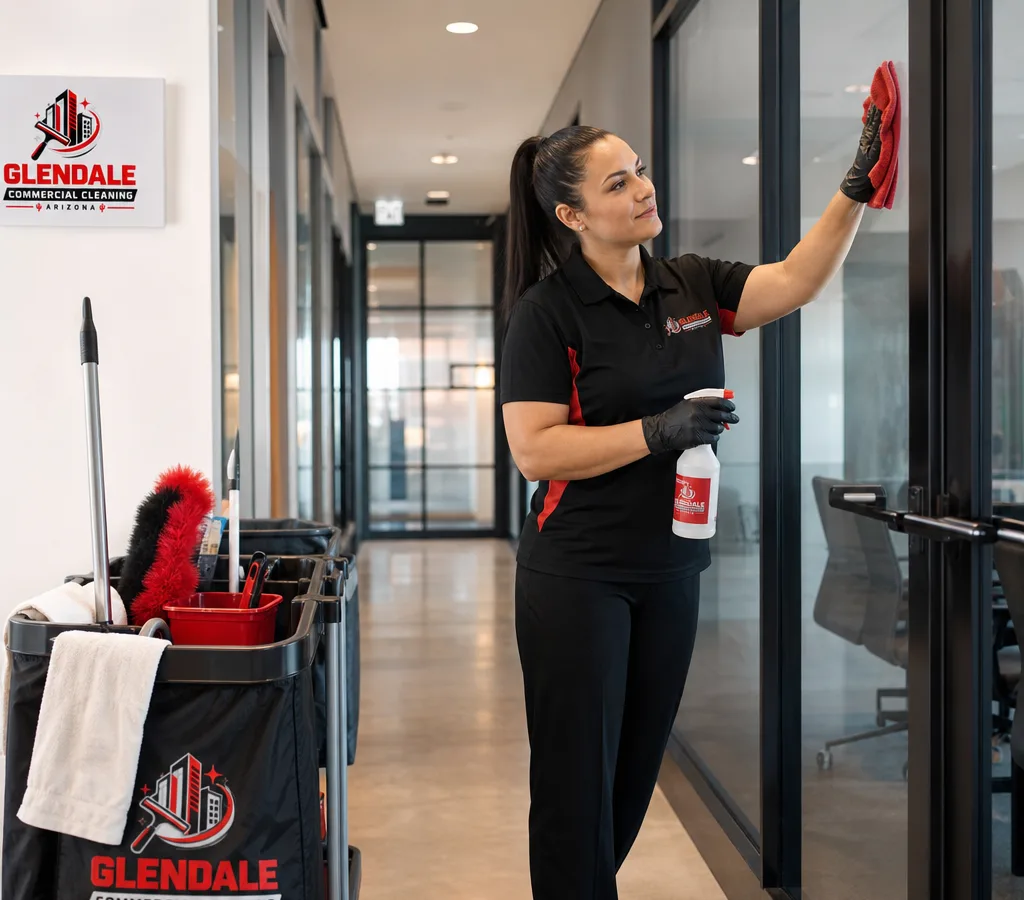
Site Coordination
An active jobsite has its own access rules, power limits, and waste arrangements. Agreeing the practical details early keeps a cleaning crew productive on arrival.
Common commercial floor care work includes:
The entryway is usually the highest-wear zone. Regular edge work and targeted attention near doors helps stop grit from becoming scratches or permanent haze.
Project Boundaries
Post construction work is a project with an end date. Knowing where it stops clarifies which trade owns a remaining item and what comes next after handover.
A practical post-construction scope often includes:
For multi-phase projects, we can schedule a rough clean between trades and a final clean at handoff.
Scope Variables
Dust load and detail count drive this work. A straightforward paint-and-carpet refresh is a different job from a full build-out with new millwork, glass partitions, exposed ceilings, and hundreds of labeled fixtures.
Phasing matters too: rough, finish, and final visits each carry their own hours, and a crew working around active trades moves slower. We walk the site at its current stage and estimate from what is actually there.
Project Questions
Contractors and owners ask about timing the final clean, number of visits, the difference from a deep clean, debris responsibility, dust that returns, and occupied-building remodels.
After the last dusty trade has finished, and close enough to handover that settling does not undo it. Booking the final clean while punch work is still running almost guarantees a second visit. Where the schedule is tight, a short touch-up pass right before the owner walkthrough is cheaper than cleaning the space twice.
Two or three on most commercial projects. A rough clean after framing and drywall clears bulk dust before finishes go in, a finish-phase clean follows painting and flooring, and the final clean comes after the last trade leaves. Small remodels sometimes combine the first two, but skipping straight to a final clean rarely works out.
No. Deep cleaning removes accumulated grime from a space that has been in use, built up slowly over months of occupancy. Construction cleanup removes fine particulate from a space nobody has occupied yet, and that dust behaves differently: it stays airborne, resettles in waves, and sits in grid, tracks, and vents rather than on floors.
Debris removal belongs to the build contract. Lumber offcuts, packaging, drywall scrap, and dumpster management stay with the general contractor and the trades. What falls to cleaning is dust, residue, adhesive, labels, and the detailing that makes the finished space presentable. The split is confirmed in writing before work starts.
Fine particulate lodges in ceiling grid, vent louvers, and door tracks during construction, then releases slowly once the HVAC system runs. Cleaning vent faces and grid during the final pass reduces it considerably. A short touch-up visit after the system has run for several days clears whatever the airflow brings down afterward.
Yes, and occupied remodels are common in multi-tenant Glendale properties. Cleaning is scheduled per zone as each section is released, with attention to the corridors and shared restrooms that carry dust into finished areas. Access timing is coordinated with building management so tenants are not walking through active work.
Schedule Cleanup
Send us the project stage, the square footage, and your handover date. A site walk tells us which phases the job needs, and each visit is estimated against what is genuinely left to clean.
Request a quote
Send the basics and we will follow up to arrange a walkthrough.