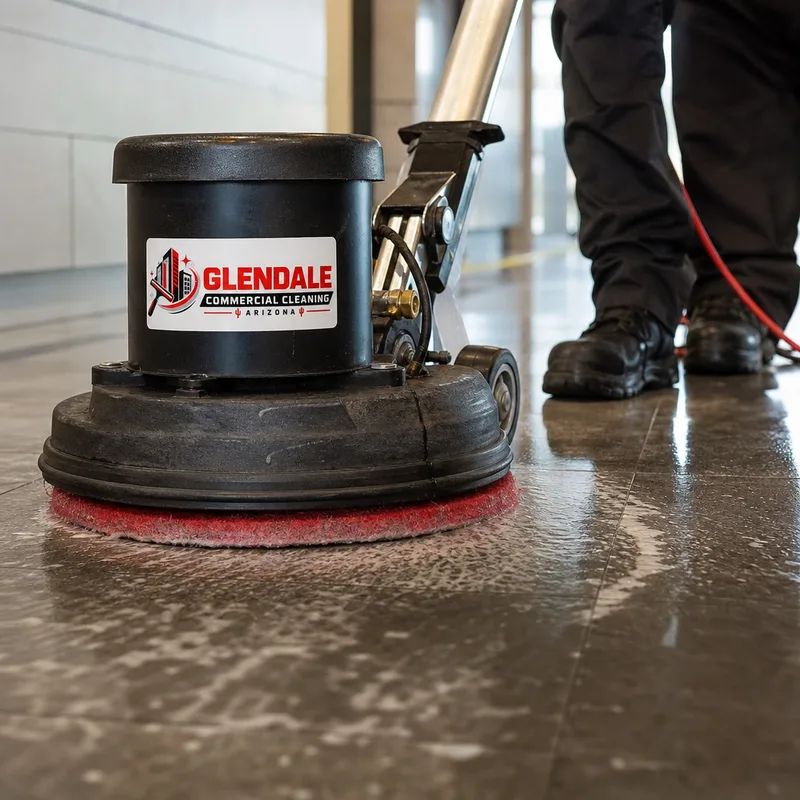
Dining room floors and seating
Floors are degreased rather than just mopped, and chair legs, booth bases, and banquette seams are cleared of crumbs and spill residue that attract pests overnight.
Serving Glendale, Arizona & surrounding areas
Mon–Fri 8am–6pm · Sat 9am–2pm
Dining Room Cleaning
Cleaning for Glendale restaurants on the surfaces guests and inspectors both look at: dining rooms, restrooms, entry glass, and the hard floors that carry a daily grease load.
Grease Changes Everything
Airborne grease migrates well past the kitchen line and settles on floors, baseboards, and chair legs. It bonds dust into a film that general-purpose cleaning will not lift.
Glendale Commercial Cleaning provides commercial cleaning and janitorial service for Glendale, Arizona businesses, with scopes built around your hours, traffic patterns, and actual surfaces. The plan changes between a quiet professional office, a high-touch retail floor, and a shared multi-tenant suite.
Our approach is straightforward:
You will find us near Glendale’s downtown core at 5555 N 51st Ave, Suite 5, which helps when you need reliable service coordination for multi-tenant buildings, storefronts, and office corridors where timing matters.
Restaurant Zones
Dining room, restrooms, entry and waiting area, back-of-house floors and hard surfaces, and the service station areas split a restaurant into five zones with distinct soil loads.
Floors are degreased rather than just mopped, and chair legs, booth bases, and banquette seams are cleared of crumbs and spill residue that attract pests overnight.
Restrooms in a restaurant are judged against the kitchen in a guest's mind. Fixtures, floors, grout, and dispensers are serviced on every visit, with odor sources traced rather than masked.
Door glass, host stand, and waiting benches collect hands and dust all service. Entry flooring takes grit from the lot and tracked-in moisture during monsoon season.
Floors, walls, and the junctions between them in prep and dish areas hold grease film. This is where inspection attention concentrates and where mopping alone never succeeds.
Drink stations, ice wells, and tray shelves get sticky residue that spreads to every hand touching them. Cleaning under and behind the equipment matters as much as the visible top.
Scope Boundaries
Some restaurant cleaning is licensed, specialist work and some is not. Being clear about the split protects your compliance position and avoids paying for overlap.
Core janitorial cleaning often includes:
Optional add-ons include interior glass, high dusting, employee-kitchen degreasing, and consumables tracking by request.
Many Glendale facilities prefer a rotating weekly detail list, allowing the space to stay sharp without turning every visit into a deep clean.
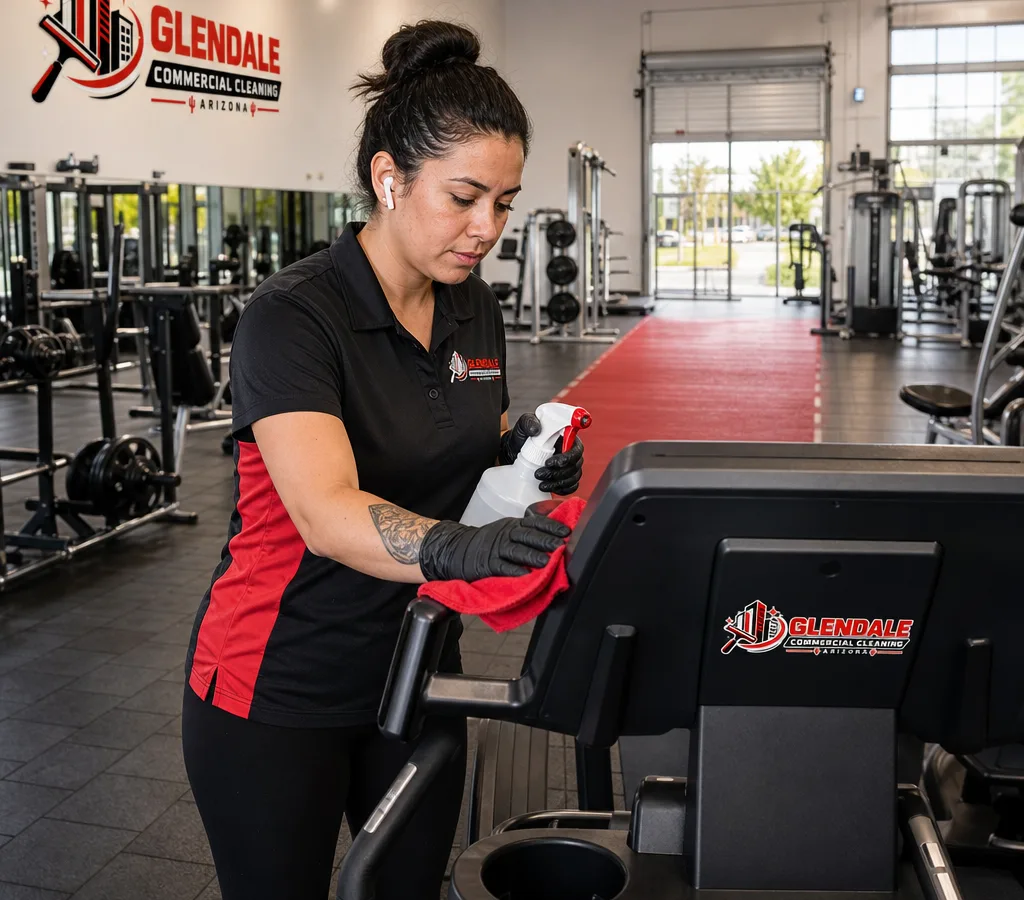
Service Timing
Restaurants rarely close for long. The cleaning window is narrow, sits late or early, and has to leave floors dry before the first staff arrive.
Deep cleaning commonly focuses on:
Whether you manage a small Downtown Glendale office, a busy storefront, or a shared multi-tenant suite, periodic deep cleaning prevents the slow decline that makes a technically clean space feel worn.
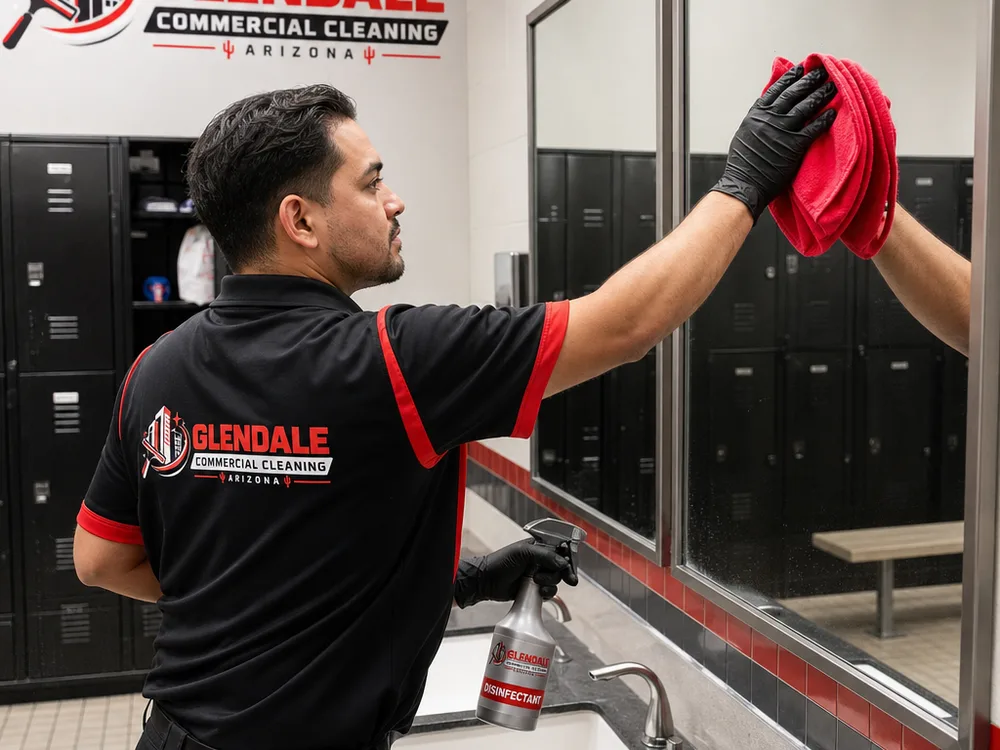
Inspection Readiness
An inspection tends to focus on the same places every time, and most of them are reachable by cleaning rather than by capital work.
Common commercial floor care work includes:
The entryway is usually the highest-wear zone. Regular edge work and targeted attention near doors helps stop grit from becoming scratches or permanent haze.
Pricing Drivers
Grease load and floor area drive restaurant cleaning cost together. A cafe serving light fare is a different job from a full-service kitchen whose airborne film reaches the dining room baseboards every single night.
Seating count, restroom count, floor material, and how many nights a week you need covered all adjust it further. We walk the restaurant during a quiet period, note where the film has reached, and estimate from the written scope.
Restaurant Questions
Operators ask about hood cleaning, dining floors that stay dull, overnight scheduling, what inspectors notice, and whether the kitchen is included at all.
No, and you should be wary of a janitorial company that says yes. Hood and duct cleaning is certified specialist work with its own documentation requirements, engaged separately. What a cleaning scope does cover is the grease film that migrates onto walls, floors, and ceilings beyond the hood itself, which builds up steadily between specialist visits.
Almost certainly grease film combined with mop residue. Mopping a greasy floor with a neutral cleaner spreads a thin layer rather than removing it, and each pass adds to the haze. Degreasing chemistry with proper agitation and recovery lifts the accumulated film, after which routine cleaning holds a much better appearance.
Either overnight after close or early morning before prep, and which one works depends on your kitchen's schedule more than the dining room's. Drying time is the real constraint: floors have to be dry and furniture reset before staff arrive. For seven-day operations we build the schedule around your quietest service rather than assuming a weekday pattern.
It helps with the cleaning-related findings, which are a meaningful share of them. Floor and wall junctions, restroom condition, debris under equipment, and grease on surfaces near the line all come up regularly and all respond to a scope that names them explicitly. Equipment, temperatures, and food handling remain your program's responsibility.
Floors, walls, and non-food-contact surfaces in back-of-house are included, and that is where grease film does most of its damage. Food contact surfaces, prep equipment, and anything inside your line stay with your kitchen team under your own food safety procedures. The split is written into the scope so there is no uncertainty at shift change.
Restaurant Walkthrough
Tell us your close time, your floor materials, and where the grease film shows worst. A walkthrough during a quiet period is enough to write a scope separating your work from ours clearly.
Request a quote
Send the basics and we will follow up to arrange a walkthrough.