Classrooms and activity rooms
Desks, table undersides, chair backs, and low shelving are cleaned at the height children use them. Floors get attention in the corners where materials and crumbs collect.
Serving Glendale, Arizona & surrounding areas
Mon–Fri 8am–6pm · Sat 9am–2pm
Education Facility Cleaning
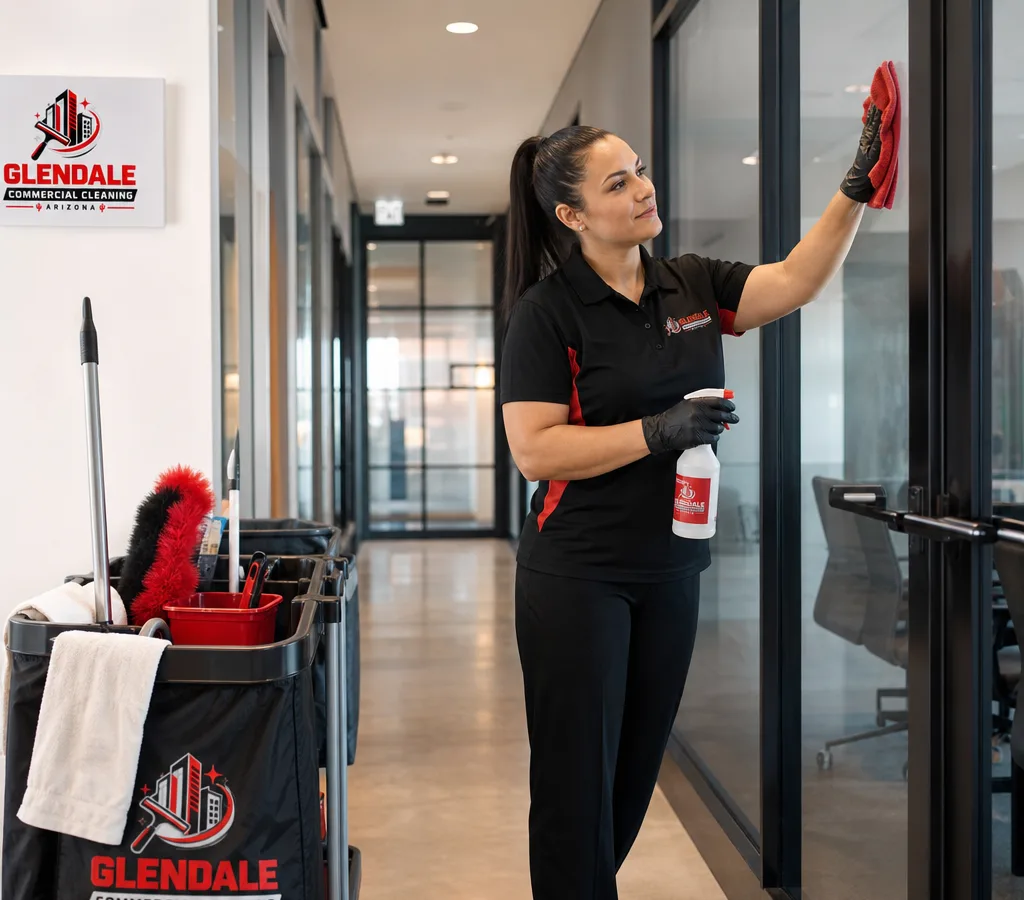
Cleaning for Glendale schools and child care centers built around how children actually use a building: classrooms, cafeterias, gyms, restrooms, and every shared surface between them.
Low Surfaces Count
Contact happens low down and everywhere: table undersides, chair backs, door edges, floor-level play surfaces. An adult-height cleaning habit misses most of it.
Glendale Commercial Cleaning provides commercial cleaning and janitorial service for Glendale, Arizona businesses, with scopes built around your hours, traffic patterns, and actual surfaces. The plan changes between a quiet professional office, a high-touch retail floor, and a shared multi-tenant suite.
Our approach is straightforward:
You will find us near Glendale’s downtown core at 5555 N 51st Ave, Suite 5, which helps when you need reliable service coordination for multi-tenant buildings, storefronts, and office corridors where timing matters.
Campus Areas
Classrooms, restrooms, cafeteria and eating areas, gyms and activity spaces, and corridors with their entry points make up the five areas of a campus scope.
Desks, table undersides, chair backs, and low shelving are cleaned at the height children use them. Floors get attention in the corners where materials and crumbs collect.
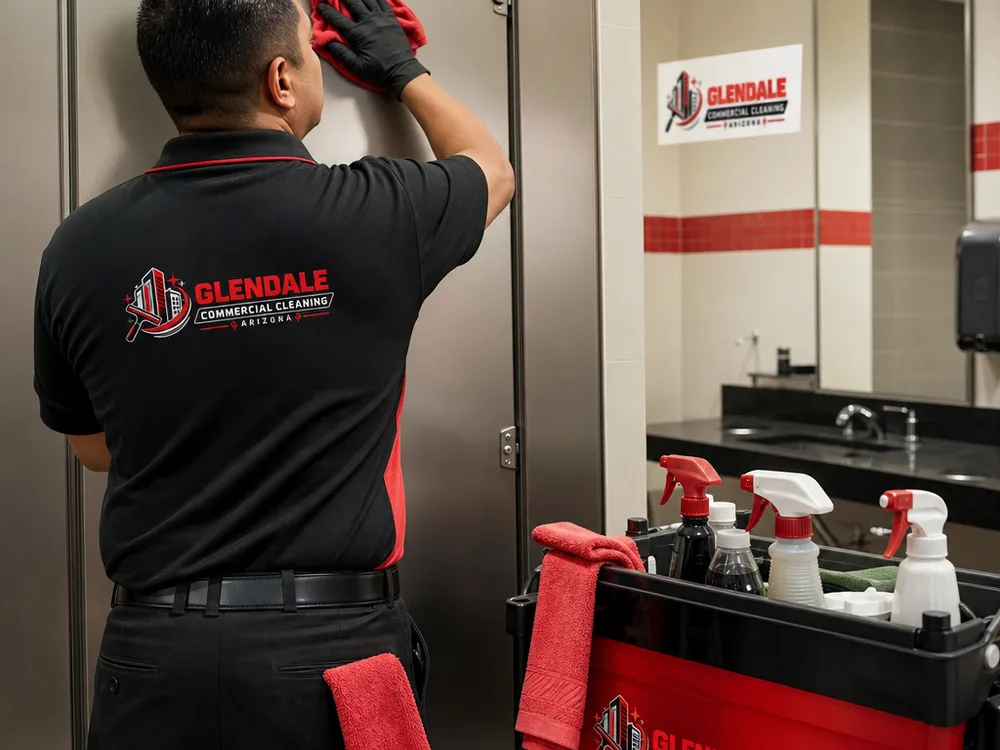
Fixtures, floors, grout, partitions, and dispensers are serviced to a standard that holds through a school day. Restrooms in a school need frequency more than any single deep treatment.
Tables, bench seating, and floors carry food residue that attracts pests if left overnight. Table undersides and seat seams hold more than the visible surface does.
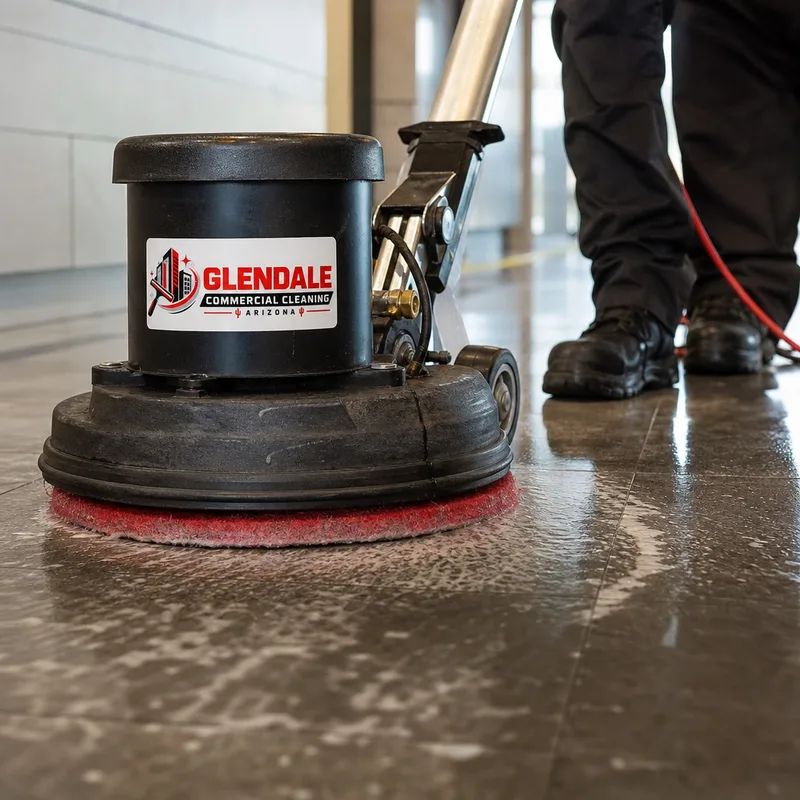
Floors, mats, and contact surfaces take sweat and hands all day. Gym floor finishes have particular requirements, so the method is matched to the surface rather than assumed.
Lockers, handrails, push plates, and drinking fountains are the shared touchpoints linking every room. Entries bring in desert dust and grit that spreads down the building.
Academic Calendar
A school building empties on a predictable cycle, and that cycle decides when heavy work is even possible. Planning against it is most of the scheduling task.
Core janitorial cleaning often includes:
Optional add-ons include interior glass, high dusting, employee-kitchen degreasing, and consumables tracking by request.
Many Glendale facilities prefer a rotating weekly detail list, allowing the space to stay sharp without turning every visit into a deep clean.
Safe Products
Product choice in a school is narrower than in a general commercial space, and the reasons are practical as much as regulatory. Residue and odor both matter here.
Deep cleaning commonly focuses on:
Whether you manage a small Downtown Glendale office, a busy storefront, or a shared multi-tenant suite, periodic deep cleaning prevents the slow decline that makes a technically clean space feel worn.
Access And Safety
A campus has safeguarding rules a cleaning provider has to fit into rather than negotiate. Settling all of them before the first visit is a condition of the work.
Common commercial floor care work includes:
The entryway is usually the highest-wear zone. Regular edge work and targeted attention near doors helps stop grit from becoming scratches or permanent haze.
Budget Factors
Classroom and restroom count drive school cleaning cost, together with how many days a week the building is occupied. A small child care center and a multi-wing campus are different in kind, not just in size.
Cafeteria size, gym flooring, and whether you want increased touchpoint frequency through winter all shape the figure. We walk the campus during a break or after dismissal and estimate from the scope.
Campus Questions
Administrators ask about product safety, background checks, cleaning during the day, restroom frequency, and what gets done over breaks.
Product selection is narrower in a school than in a general commercial space, and your district or center policy takes precedence over anything we would otherwise choose. Beyond the product itself, method matters: controlling dilution, rinsing where needed, and avoiding strong fragrance in occupied rooms. Materials are stored secured and away from children between visits.
Whatever your district or licensing body requires is treated as a condition of working the site, not as a negotiable extra. Campus sign-in, badging, and visitor procedures are followed on every visit as you define them. If your requirements change, the arrangement changes with them rather than carrying on under the old understanding.
Most of it is better after dismissal, and that is the default. Some work genuinely needs doing during the day, particularly restrooms in a busy building and spill response, and that coverage is planned so crew movement stays clear of instructional spaces. Heavy work waits for after hours or a break week.
In a school, frequency beats intensity. A restroom serving a busy wing needs attention more than once a day to stay usable, where a single thorough nightly clean will not hold through the afternoon. The practical approach is a daytime check and restock on top of the full nightly service, with the check frequency set by how heavily each restroom is used.
Breaks are when the work that cannot happen in term time gets done. An empty building allows floor work, deep cleaning, and anything needing rooms cleared and then left alone to dry or cure. Start-of-year readiness is scheduled backward from the first day, so rooms are finished before staff return to set up their spaces.
Campus Walkthrough
Give us your classroom count, your dismissal time, and your break dates. A campus walkthrough sets the term-time route, and the heavier work gets planned into the windows your calendar allows.
Request a quote
Send the basics and we will follow up to arrange a walkthrough.